What if the slowest part of building a custom home in Silverleaf has nothing to do with the builder you hire, the weather, or the price of lumber, and everything to do with a five-member committee whose name never shows up on a lot listing?
That committee is the DC Ranch Covenant Commission, and in Silverleaf it does something most buyers do not expect from an HOA. It does not review your project alongside the city of Scottsdale. It reviews it first. A Certificate of Covenant Compliance has to be in hand before you can even apply for a City of Scottsdale building permit. The sequence buyers assume, design in parallel with the city while the HOA signs off on paint colors, is not the sequence that governs Silverleaf. Here, the HOA is the gate before the gate.
The Sequence Most Buyers Get Backward
Anyone who has built a custom home in a standard subdivision is used to a rhythm where architectural review and municipal permitting move roughly in step, sometimes with the HOA lagging a few weeks behind the city. Silverleaf inverts that. The Covenant Commission process runs in three stages, Massing Review, Preliminary Review, and Final Review, and it has to clear entirely before the city permit process can start. That means a buyer who assumes their architect can submit to both bodies at once, and let the faster one wait on the slower one, is planning around a sequence that does not exist here.
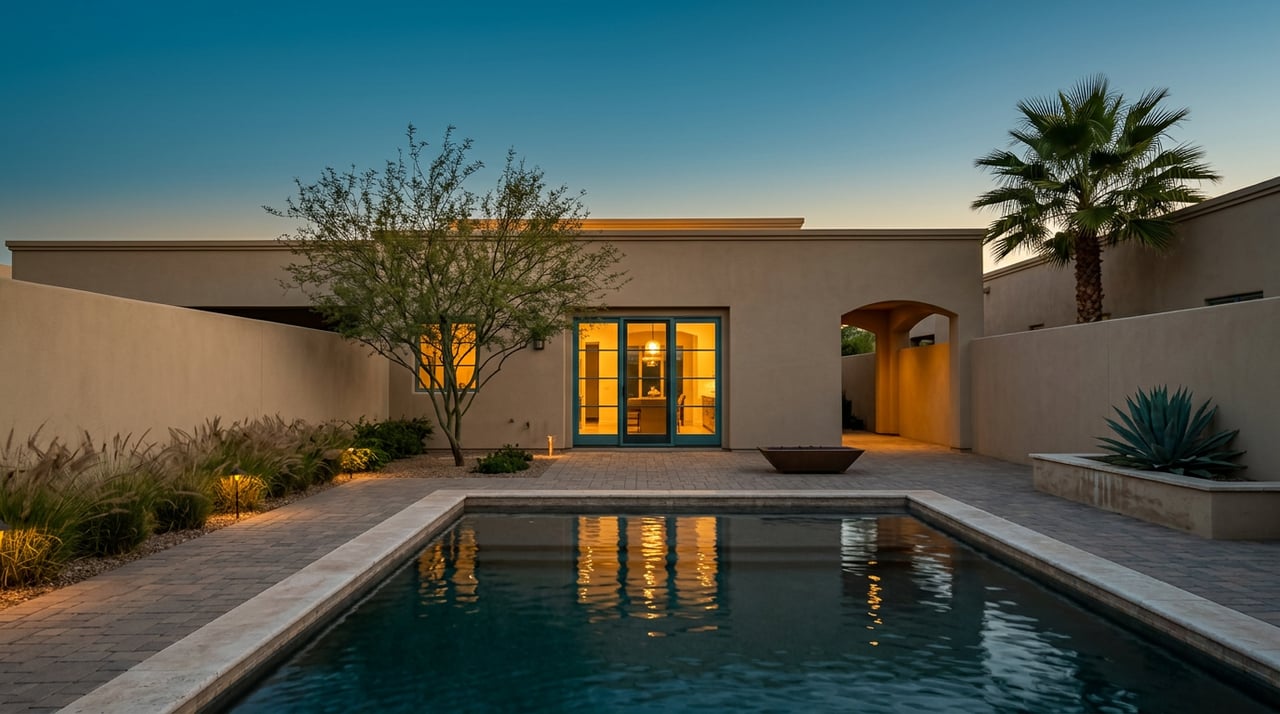
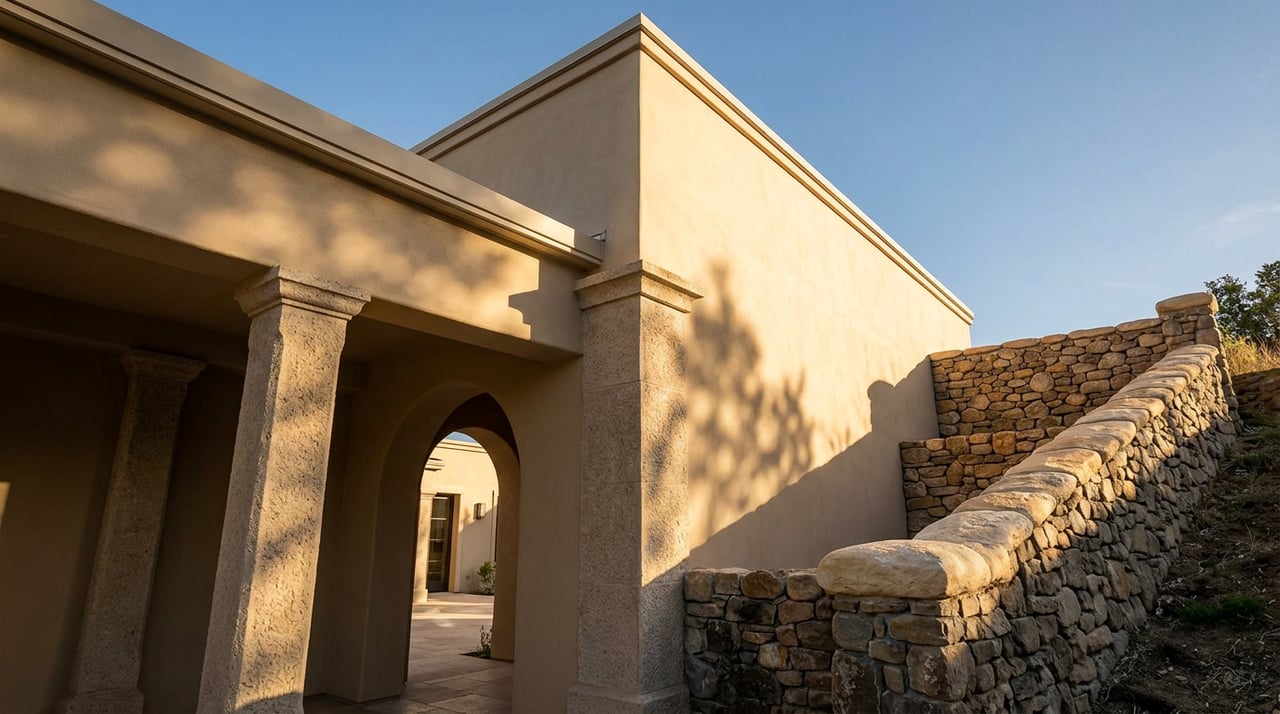
This is not a quirk unique to one sub-neighborhood. It applies across Silverleaf's guard-gated sections, whether the lot sits in Horseshoe Canyon, the Upper Canyon, or one of the Parks. The commission evaluates exterior materials, rooflines, setbacks, grading, and lighting against a design vocabulary that leans Spanish, Mediterranean Revival, and Southwestern Contemporary. A modern glass box proposed on a lot zoned for a pitched-roof Old World home is not a style preference the committee might overlook. It is a submission that gets sent back, and every round of revision resets a clock that was never running alongside the city's clock to begin with.
What the Commission Actually Looks At
The review is not a rubber stamp on a floor plan. Submittals move through defined phases, and each one covers different ground:
- Pre-design consultation confirming massing, setbacks, and view impact
- Schematic review of exterior elevations, roof forms, and material palette
- Design development review covering hardscape, walls, and planting concepts
- Construction document review addressing lighting, exterior colors, and final material samples
- On-site staking review before permit, and again before the pour on some lots
Landscaping submittals get the same scrutiny as the architecture. Plant selections, hardscape proportions, and lighting fixtures are all subject to committee approval, and the design language leans firmly native Sonoran, meaning saguaros, palo verdes, ironwoods, and ocotillos rather than substitutes that fight the climate. A buyer who treats the yard as a phase-two decision, something to finalize after the house is designed, is treating it as less important than the committee will.
Why the Builder You Hire Changes the Calendar
Two buyers with identical budgets and comparable lots can end up on very different timelines, and the variable is rarely the design itself. It is whether the builder has run projects through this specific commission before.
Salcito Custom Homes has operated in Scottsdale since 1978 and has completed close to 80 homes across DC Ranch and Silverleaf, a track record that comes with a long relationship with the Covenant Commission's design standards. Argue Custom Homes has built more than 150 homes across greater Phoenix with a concentration in Silverleaf and north Scottsdale, known for Mediterranean-style estates that fit the enclave's architectural character by design rather than by revision. Calvis Wyant, founded in 1986 as a design-build practice, has completed custom estates in Silverleaf, Desert Mountain, and Paradise Valley under one roof, meaning architecture, interior design, and construction sit inside a single accountable team. Sonora West has built more than 150 custom homes priced between $1 million and $7.5 million across Paradise Valley, Phoenix, and Scottsdale and is recognized as a preferred builder in Silverleaf and DC Ranch. Camelot Homes has completed projects across Silverleaf Village, The Parks, and Arcadia at Silverleaf in the $4 million to $12 million range.
None of that experience guarantees a faster build. What it changes is the number of revision cycles, and revision cycles are where months disappear. A builder who already knows what the commission will flag can specify materials and rooflines correctly on the first submittal instead of learning the committee's preferences through rejection.
The Timeline in Real Numbers
| Review type | Typical timeline |
|---|---|
| Routine modification (remodel, exterior change) | 4 to 8 weeks |
| Full custom build submittal | 12 to 20 weeks |
| Ground-up custom home, architect engagement to move-in | 24 to 30 months |
Those ranges assume a submittal that moves through the process without major revision. Complex hillside lots, where grading, retaining walls, and driveway design carry more design risk, tend to sit at the long end of every range, and sometimes past it.
The Budget Line Hiding Behind the Floor Plan
The same review authority that governs architecture also governs the exterior program, and that has a cost consequence buyers consistently underestimate. On hillside lots in Silverleaf and comparable north Scottsdale communities, retaining walls, drainage, pools, and planting can reach a third of the total build cost. That is not an add-on to the house. It is a design problem the committee treats with the same weight as the architecture itself, which means it has to be resolved early, not sketched in after the floor plan is set.
Buyers who price a project around the square footage of the house and treat the yard as a rounding error are the ones who get surprised when the site work number arrives. On a flatter Paradise Valley lot, that same exterior program typically carries a smaller share of the total. Silverleaf's terrain, combined with its review standards, makes the outdoor program a first-order cost rather than a finishing touch.
What This Means If You're Evaluating a Lot Right Now
Silverleaf's trailing twelve-month median sale price sits at $5.375 million, and the July 2026 active-listing median across the community runs to $7.45 million. That gap between the two numbers is not just market timing. It reflects the difference between buying a home that has already cleared the review process and buying into the process itself.
When you buy resale in Silverleaf, you are buying a completed outcome. The Covenant Commission has already ruled on the materials, the massing, the grading, and the plantings, and the years of built-out design discipline across the community's 736 homesites are part of why 20-year-old Silverleaf homes hold value at a level that drifts only modestly below new construction. When you buy a custom homesite instead, in Horseshoe Canyon or the Upper Canyon, you are buying the right to go through that same process yourself, on your own timeline, with your own builder's track record standing in for the neighborhood's built history.
Neither path is the wrong choice. But they are not the same decision dressed up in different price tags, and treating a raw lot like a faster version of resale is where a project's schedule starts slipping before the first stake goes in the ground.
A Few Questions Worth Asking Before You Buy the Lot
Does the Covenant Commission review apply to remodels, or only new construction? Both. Exterior modifications and landscaping changes go through the same submittal and approval process as new builds, though the routine-modification timeline runs shorter than a full custom submittal.
Can I bring my own architect into Silverleaf, or does the builder have to be pre-approved? Community documents allow outside architects and designers, but the builder still has to work within the design vocabulary the commission enforces, and a pre-design meeting with your team is the practical way to confirm what will be approved before drawings start.
Does it matter which of the three guard-gated entrances my lot sits near? It shapes access and daily routine more than the review process itself. Windgate Pass serves the Silverleaf Village core, Horseshoe Canyon accesses the Upper Canyon estate lots and the Preserve trailhead, and the Silverleaf Club gate serves clubhouse and golf traffic. The commission's review standards apply uniformly regardless of which gate you use.
Building or buying in Silverleaf rewards the same instinct that protects any custom project: understand the sequence before you fall in love with the site plan. If you are evaluating a homesite, a teardown, or a resale estate inside the gates and want a straight read on how the review timeline and the site costs actually stack up against your plans, Templeton Walker can walk through it with you. Request a Private Consultation.